
Best Lovable and Bolt Alternatives in 2026
Few tools get you from an idea to a working app as fast as Lovable and Bolt. Describe your app, and within minutes you have a frontend, a database, a login screen and a link you can share.
The first version ships fast, but things can slow down once it has to become part of your product. Your team wants it in your product's repo, new pages have to match what you've already shipped, or the data has to come from your company's databases.
Whether you're dealing with one of these problems or just exploring your options, here are 11 alternatives that may help.
What Lovable and Bolt do well
Both Lovable and Bolt can build full-stack apps from your prompt and let you own the generated code.
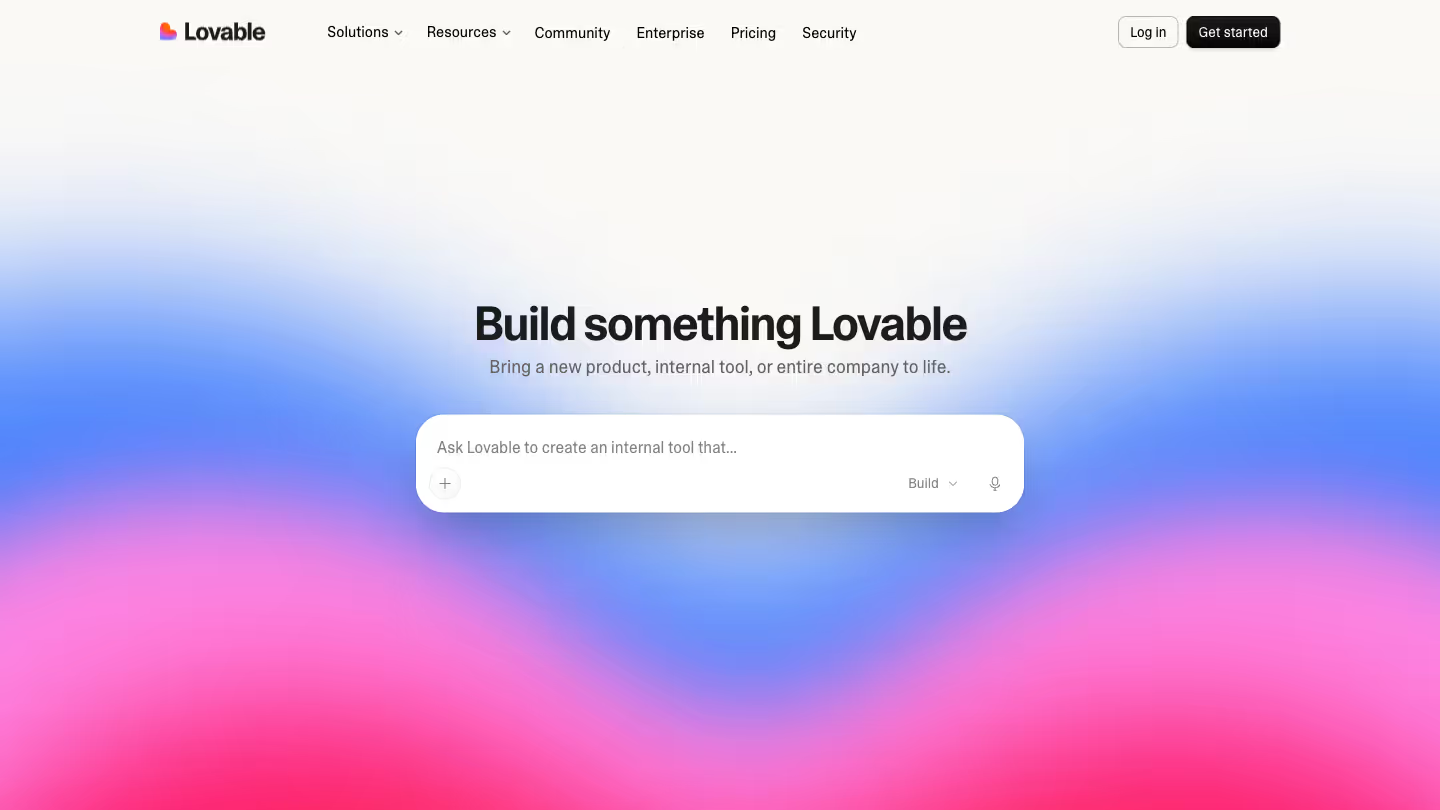
Lovable writes the frontend, backend, database and login as code. You can edit the code and sync it to GitHub, GitLab or Bitbucket. Its users range from solo builders and agencies to technical teams and large enterprises.
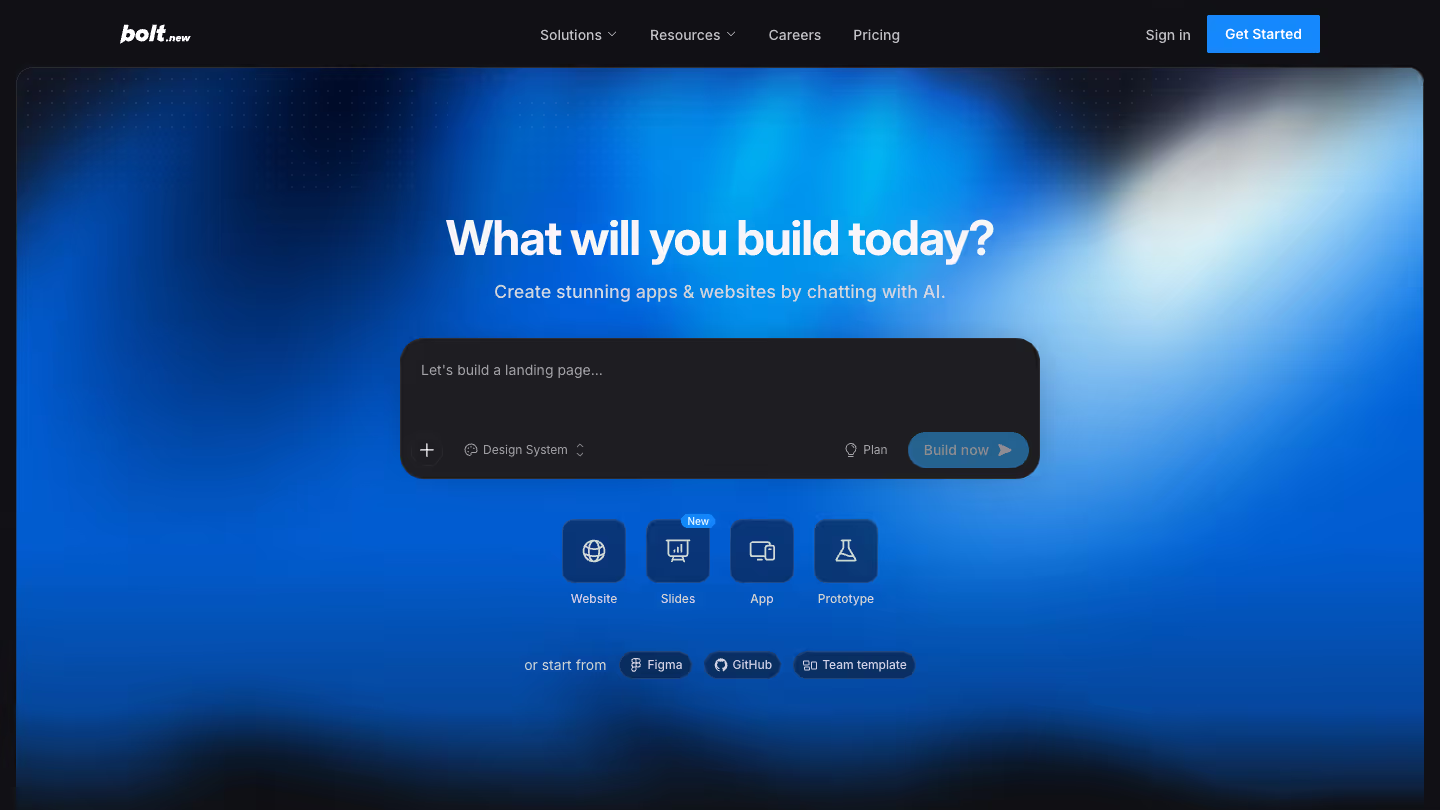
Bolt makes websites, web apps, mobile apps and even slide decks, for first-time builders and full-stack developers alike. Bolt Cloud handles the database, hosting and domain in the same project, so you don't need extra accounts.
Where Lovable and Bolt may not fit
- Lovable can't import your existing repos. It exports to GitHub and keeps one branch in sync. Bolt can import a repo, but then your project has to run only inside Bolt.
- Lovable supports design systems only for React, one per project, and uploading a Figma .fig file imports your tokens but not your components. Bolt builds a design system from your own sources, but warns that it can get confused when those sources mix frameworks, like React and Angular.
- Model choice is out of your hands in both. Lovable has no model setting, and Bolt only lets you choose between its Standard and Max agents, not the model behind them.
- Your stack choice is limited in both. Lovable builds every app on TanStack Start or React with Vite. Bolt gives you React or Vue instead, with Vite, React, TypeScript and Tailwind as the default.
- Bolt can build mobile apps using Expo. Lovable doesn't build mobile apps.
- Both tools come with their own backend. You can connect Lovable to your own Supabase project instead of Lovable Cloud, but there's no one-click move between the two. If your data already sits in your company's databases, you'll want a tool that connects to them directly.
- Lovable has SSO, audit logs and SOC 2 Type II, but it isn't HIPAA-compliant. Bolt offers SSO on Enterprise and doesn't document SOC 2, audit logs or self-hosting.
11 Lovable and Bolt alternatives worth trying
Vibe coding tools
Replit
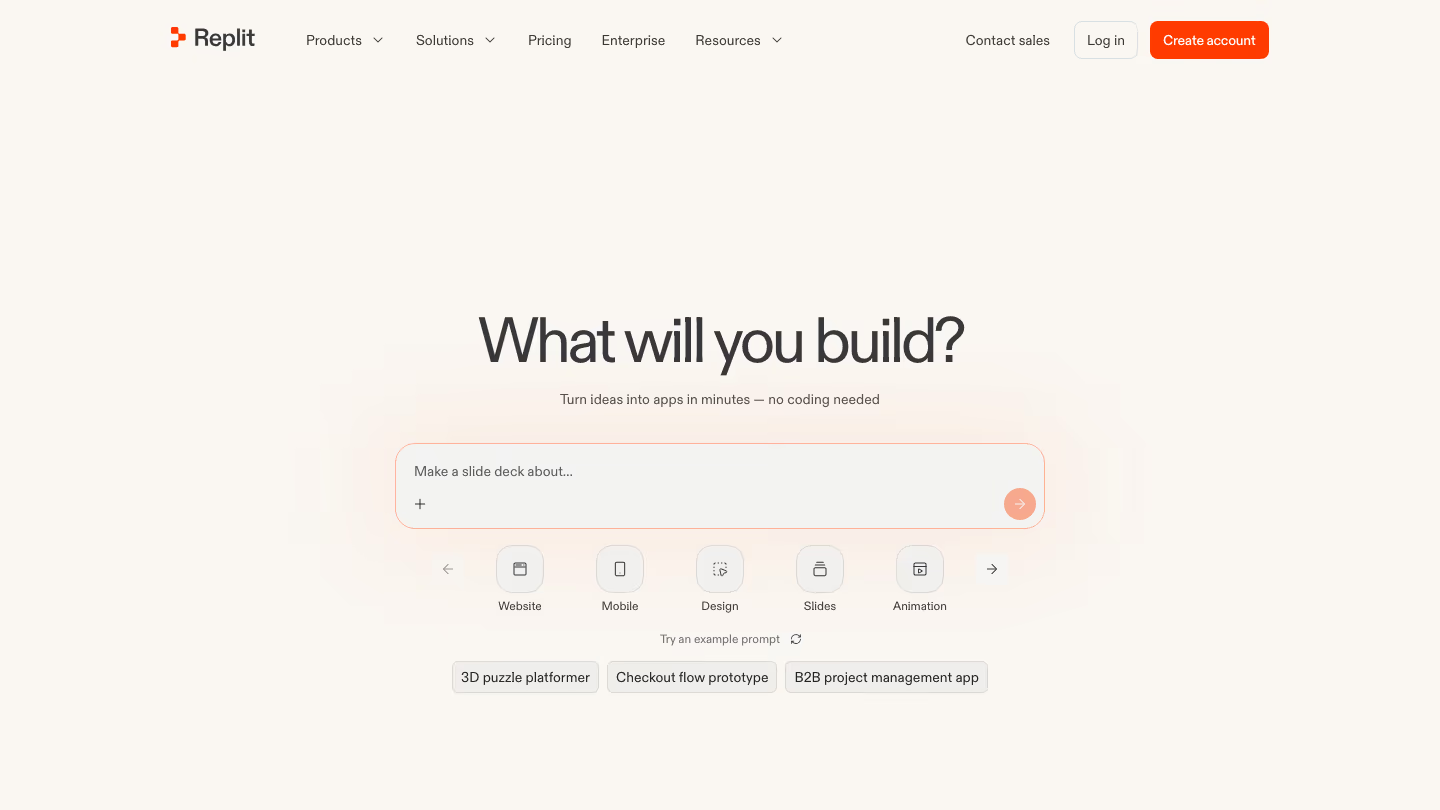
Replit is the closest to Lovable and Bolt on this list. You chat with it to build and host your apps. Unlike Lovable, Replit can import a GitHub repo and turn it into a Replit App, so you can keep building an existing project inside Replit.
Apps get a managed Postgres database, storage and login, and you can build native iOS and Android apps with Expo. Enterprise teams also get SSO, role-based access and audit logs.
Replit picks a model for each task on its own. Whether you can choose one yourself depends on your plan.
Emergent
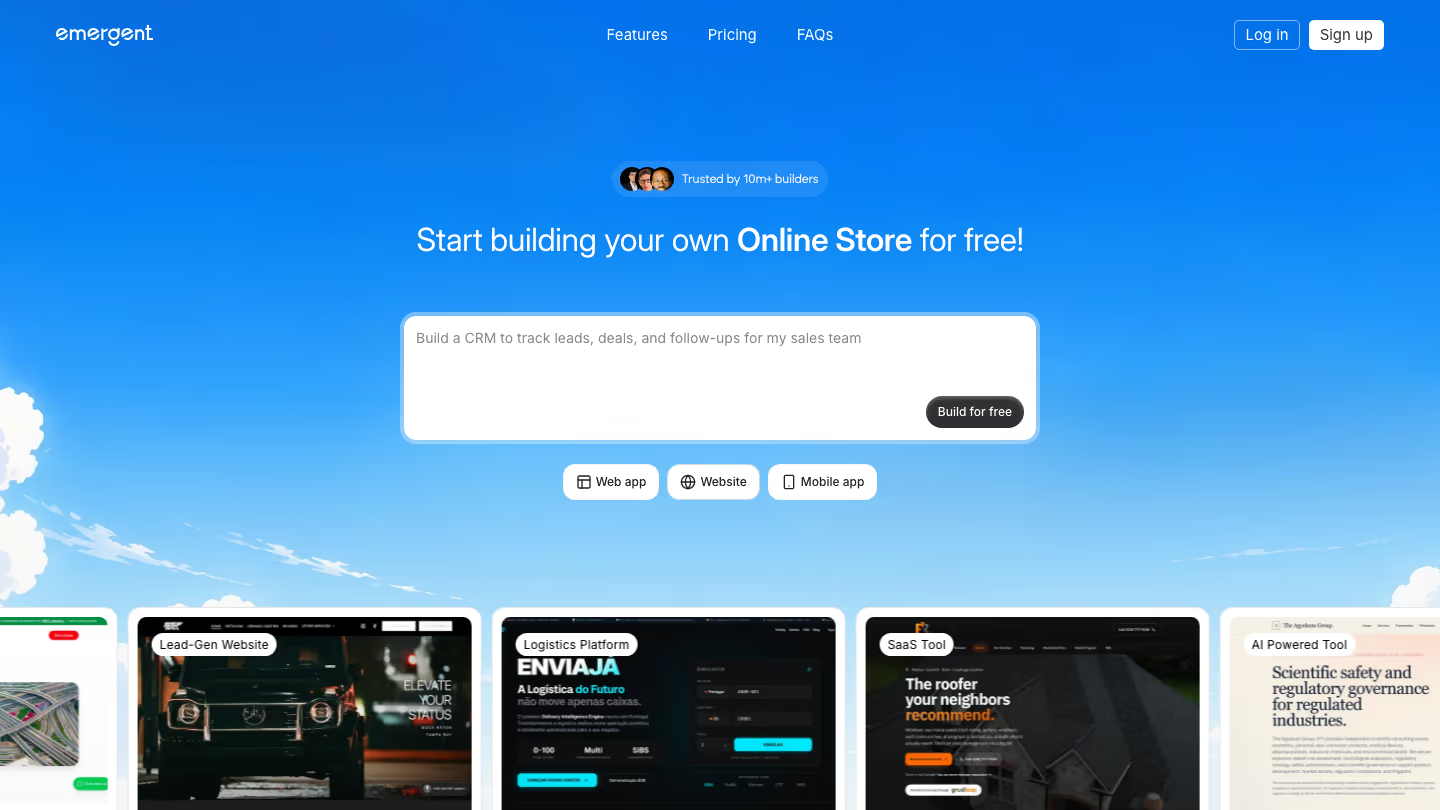
Emergent is the one to try if you want a Lovable-style builder where you choose the model. It builds full-stack web and mobile apps from your prompts, and can split the work across subagents.
Unlike Lovable, Emergent lets you import your existing GitHub repo. It also has an MCP server, so you can manage your apps from Claude Code or Codex.
Mobile apps are limited to Expo, with FastAPI and MongoDB on the backend. Flutter and native Swift or Kotlin aren't supported.
AI design tools
Kombai
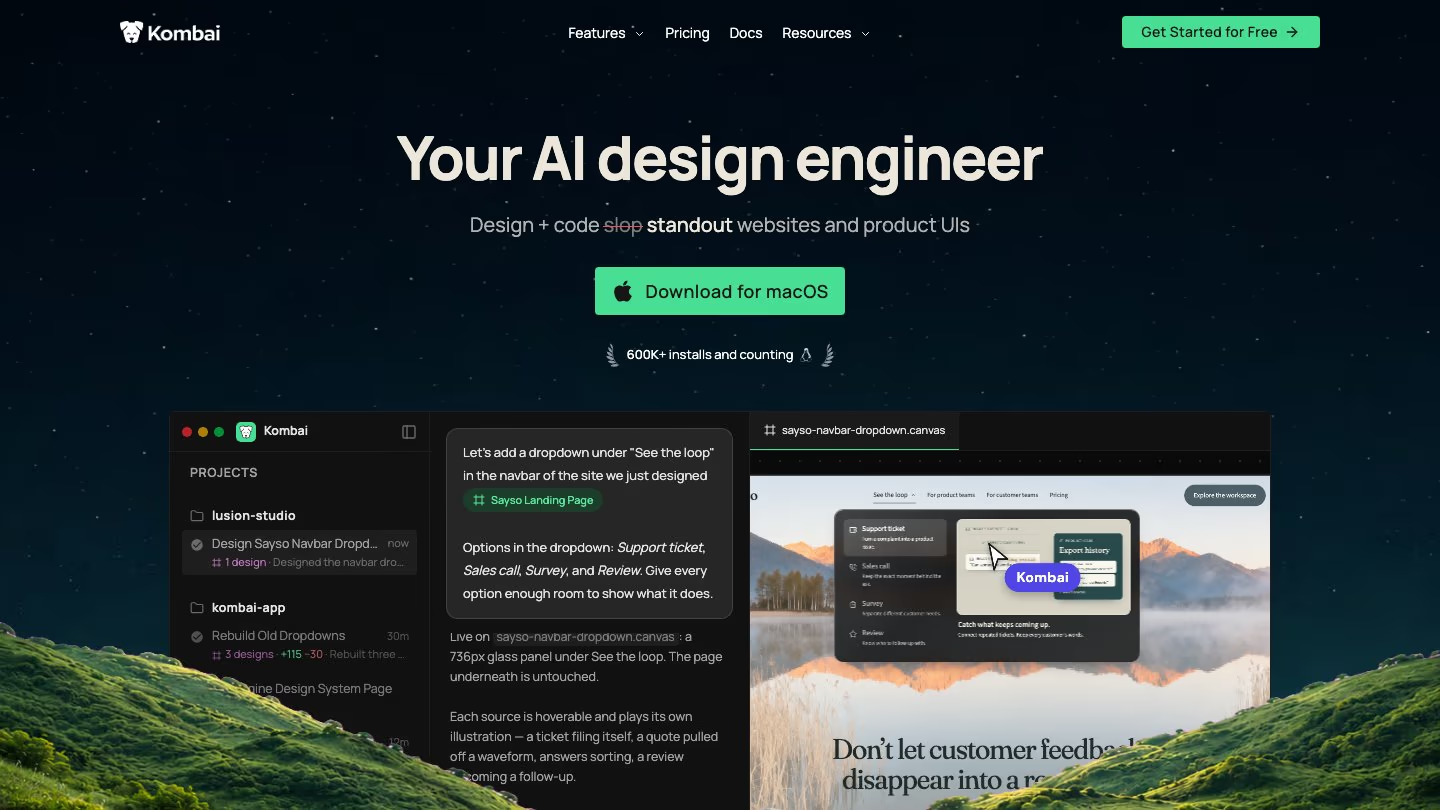
Kombai is an AI design engineer that builds standout websites and product UIs. Kombai works inside your repo and keeps design and code in sync. You can bring an existing page from your project onto the canvas, or turn a design into code that reuses your codebase items like components, tokens and stores.
Kombai has a dedicated taste agent that makes design decisions based on the purpose of each page. You can also compare several design directions on Kombai's canvas before picking one.
Kombai supports 50+ models from Anthropic, OpenAI, Google and more, for design, code, image and video generation. It codes your designs following best practices for 400+ frontend libraries and frameworks, including React, Vue, Angular, Svelte, React Native and Flutter.
Kombai is built for the frontend, so your backend and hosting stay where they are.
Claude Design
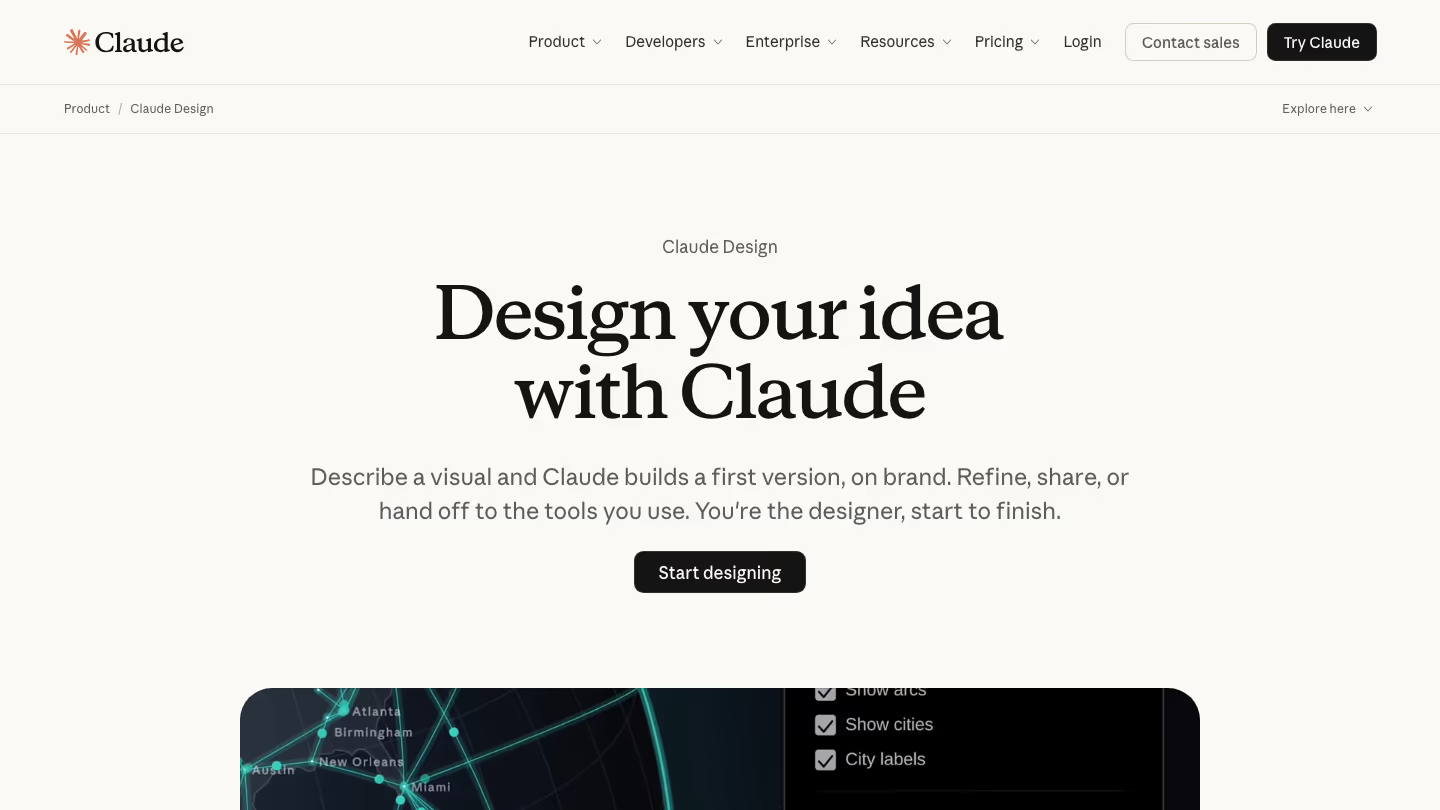
Claude Design gives designers room to explore, and gives founders, product managers and marketers without a design background a way to make polished visual work.
It's good at keeping a whole organization on brand. Once you publish a design system, every new project your team starts uses it by default. To change a design, comment on part of it, rewrite the text or drag a slider. When it's ready, send it to Claude Code to build, export it as PPTX, PDF or HTML, or pass it to tools like Canva.
Read more: Best alternatives to Claude Design in 2026
AI coding agents
Cursor
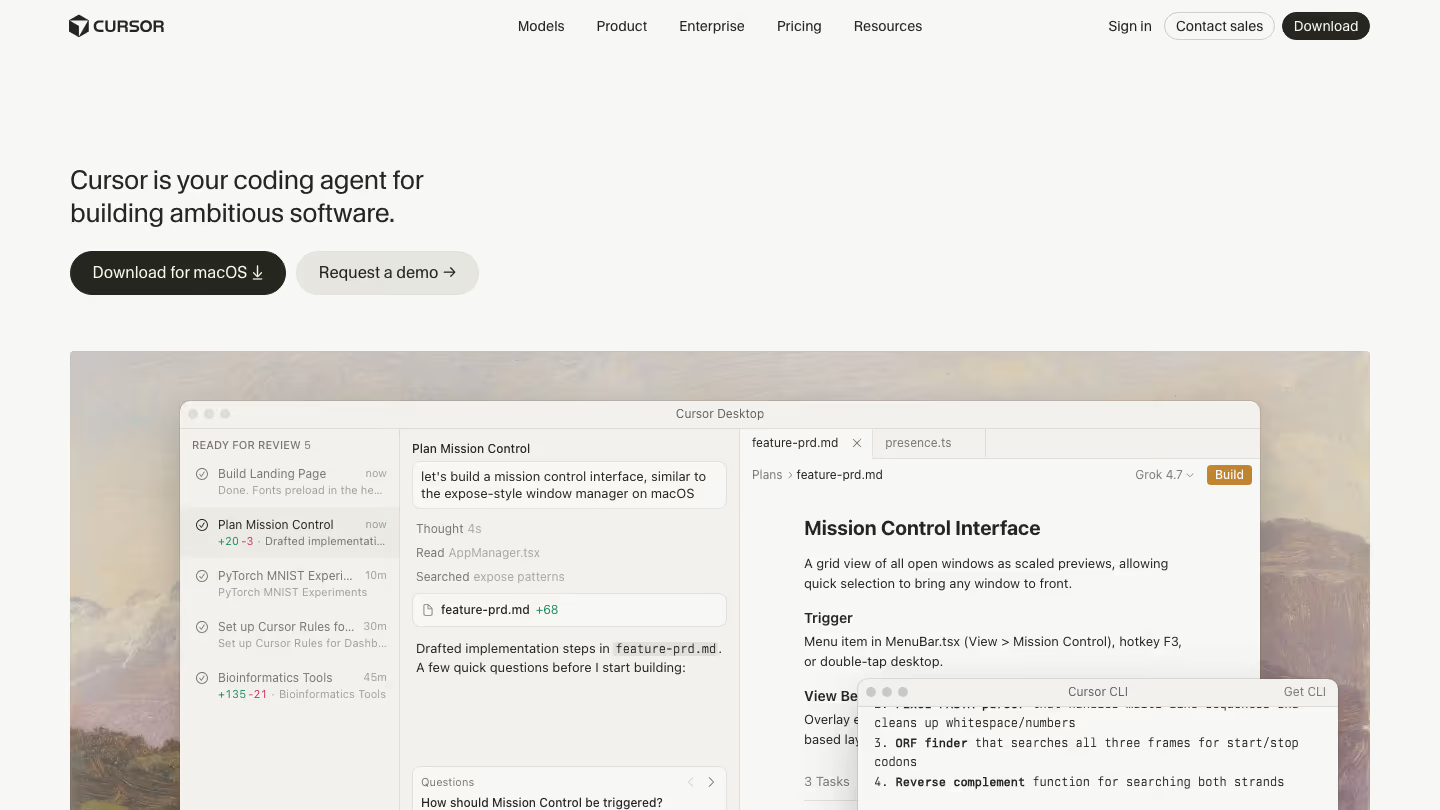
Cursor is an editor built around a coding agent, for developers who want the agent at the center of their work. It opens your existing repo and connects to GitHub, GitLab, Bitbucket and Azure DevOps.
You can choose models from Anthropic, OpenAI, Google and Cursor itself, or let Auto mode balance cost against capability. Cloud agents work on tasks in parallel while you keep going, and teams get SSO, audit logs and a privacy mode.
VS Code
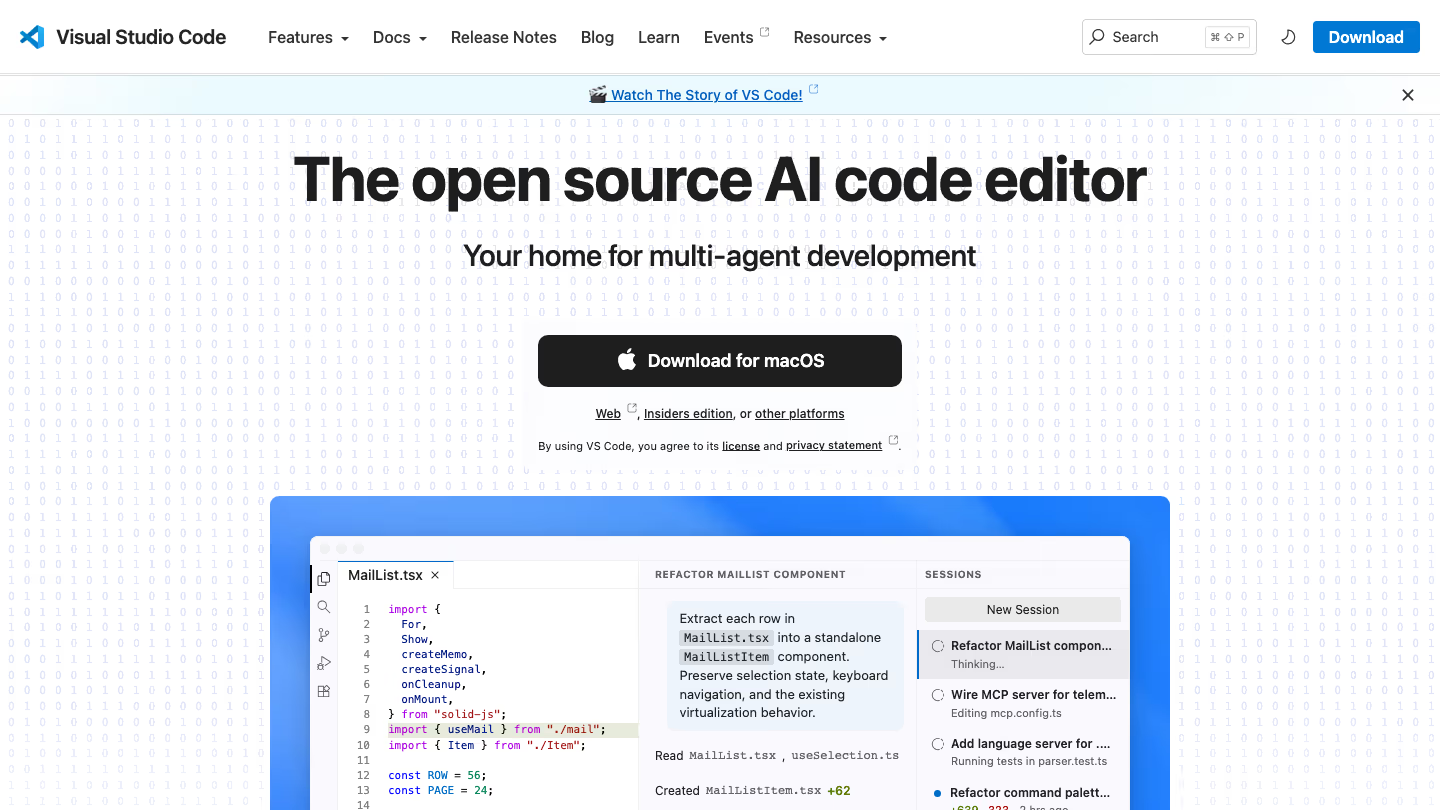
If you already use VS Code for coding, you can use its built-in AI features instead of switching.
In VS Code, agents can plan a change, hand parts of the task to subagents, and check the result in an integrated browser. You can run locally, on a remote machine, in a Dev Container or in the cloud.
VS Code also lets you select the model of your choice, use Auto, bring your own API key, or run a local model.
Antigravity
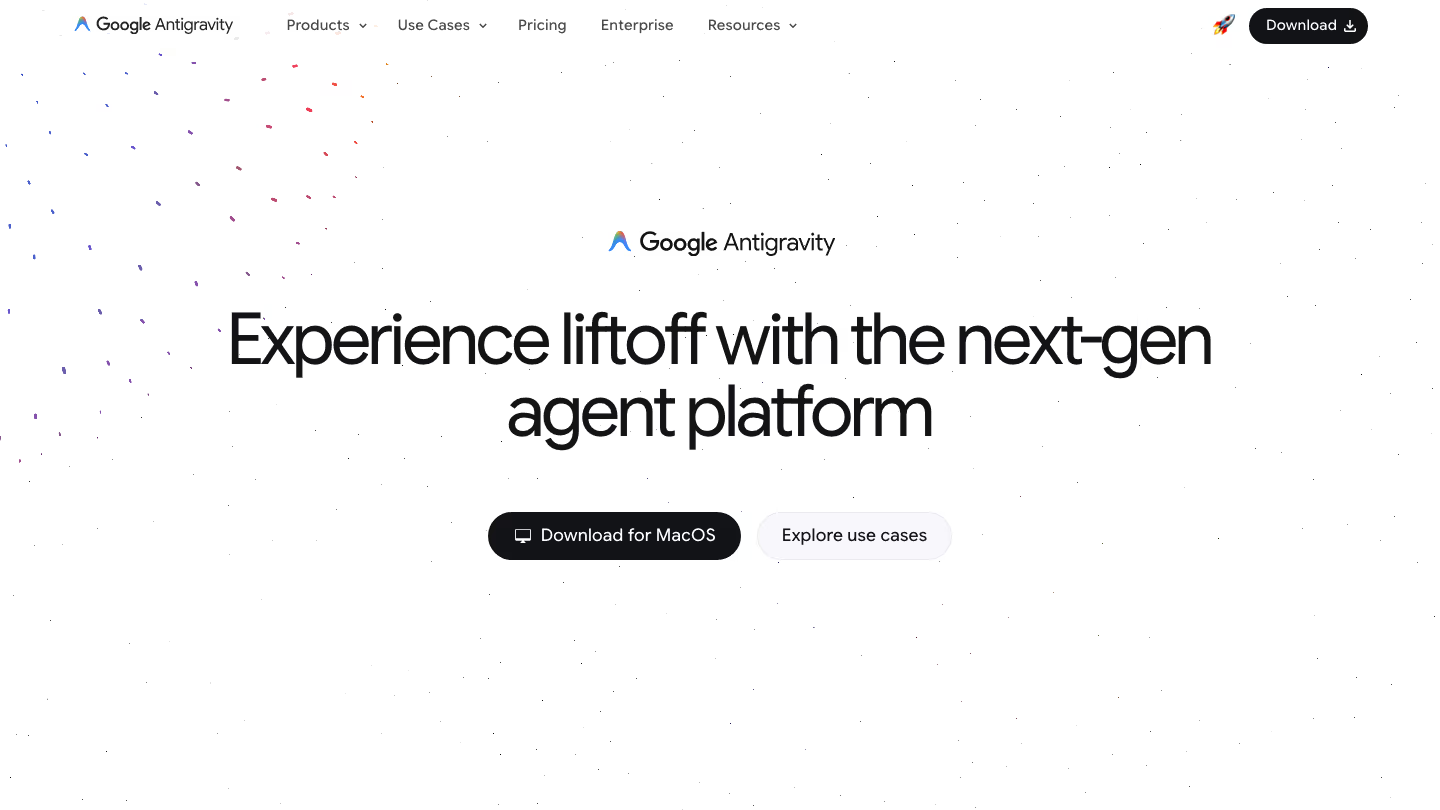
Antigravity is Google's agent-first development platform, for professional developers, hobbyists and enterprise teams. It's built for running multiple agents at once. The Agent Manager runs multiple local agents in parallel, each in its own worktree if you want, and you can plan a task with an agent before it writes any code.
When an agent tests its work, a browser subagent records screenshots and videos, so you can see what it did.
On Google AI Pro and Ultra plans, you can also choose models from other providers, like Anthropic's Claude.
Claude Code
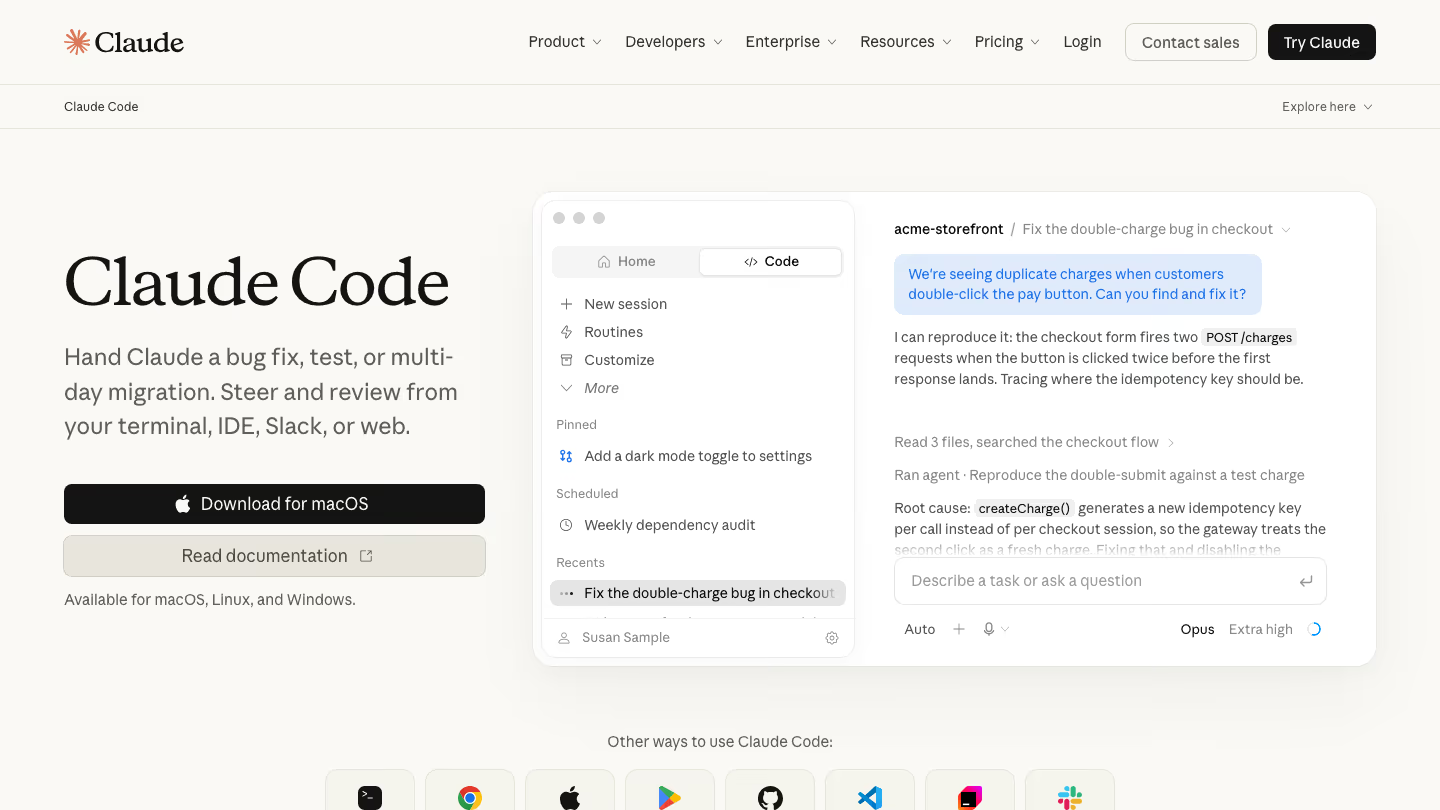
Claude Code is an AI coding agent that can read your codebase, edit files, and run commands. You can use it in the terminal, VS Code, JetBrains, the desktop app or the browser.
It handles git for you, from creating branches to opening pull requests. For bigger jobs, it splits the work across subagents running in parallel, follows skills you write, and runs hooks at set points. It runs locally, and you choose which Claude model to use.
Codex
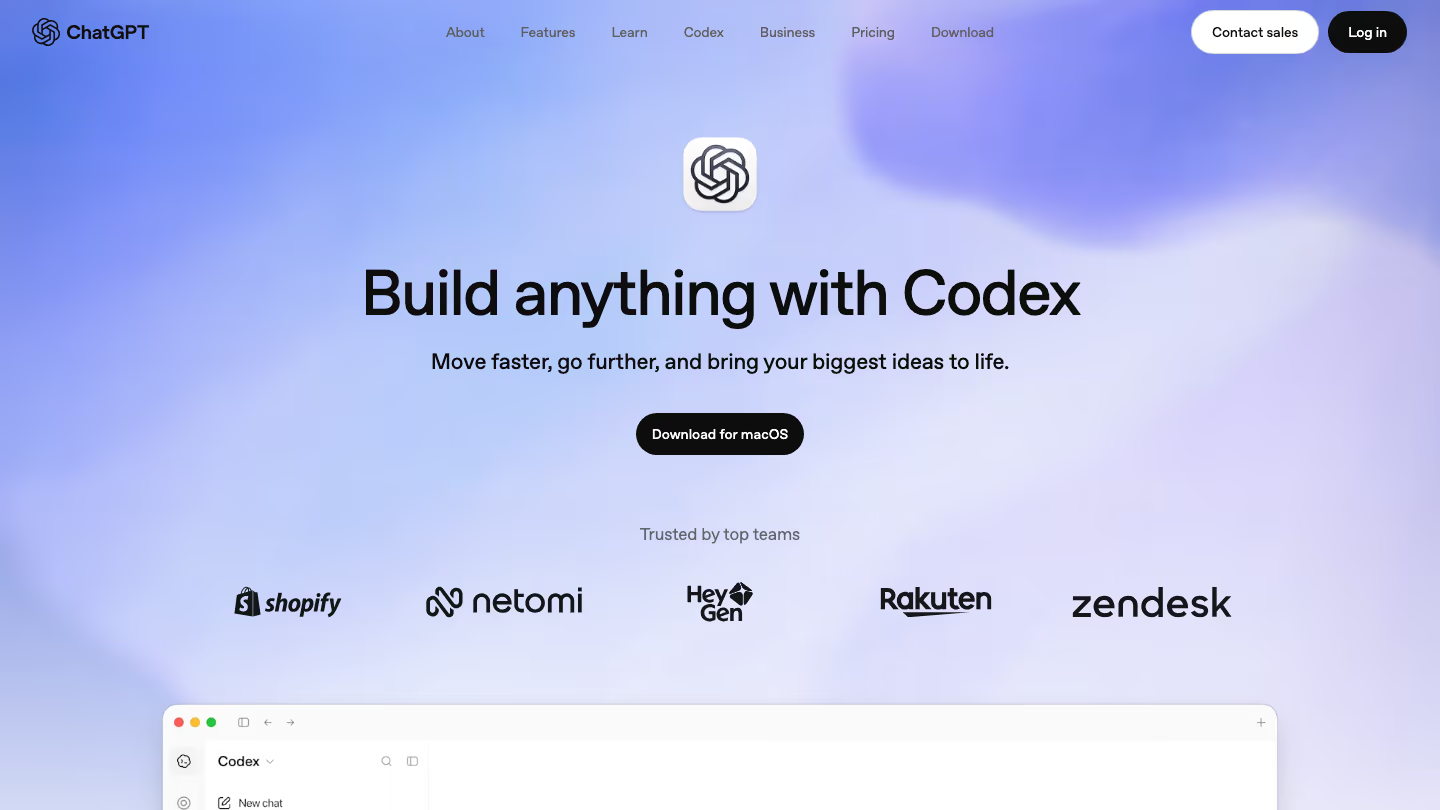
Codex is an AI coding agent that you can use for anything you'd use Claude Code for. Ask it to make changes across files, and it runs the tools and commands already on your machine.
Choose the GPT model and how much reasoning effort it uses, based on how complex the task is.
You can use it in the terminal, an IDE extension, Codex Cloud, and the ChatGPT desktop app and website. The extension works in VS Code, Cursor, Windsurf, Xcode and JetBrains IDEs, where you review its edits as diffs and can hand longer jobs to Codex Cloud.
Internal tools
Retool
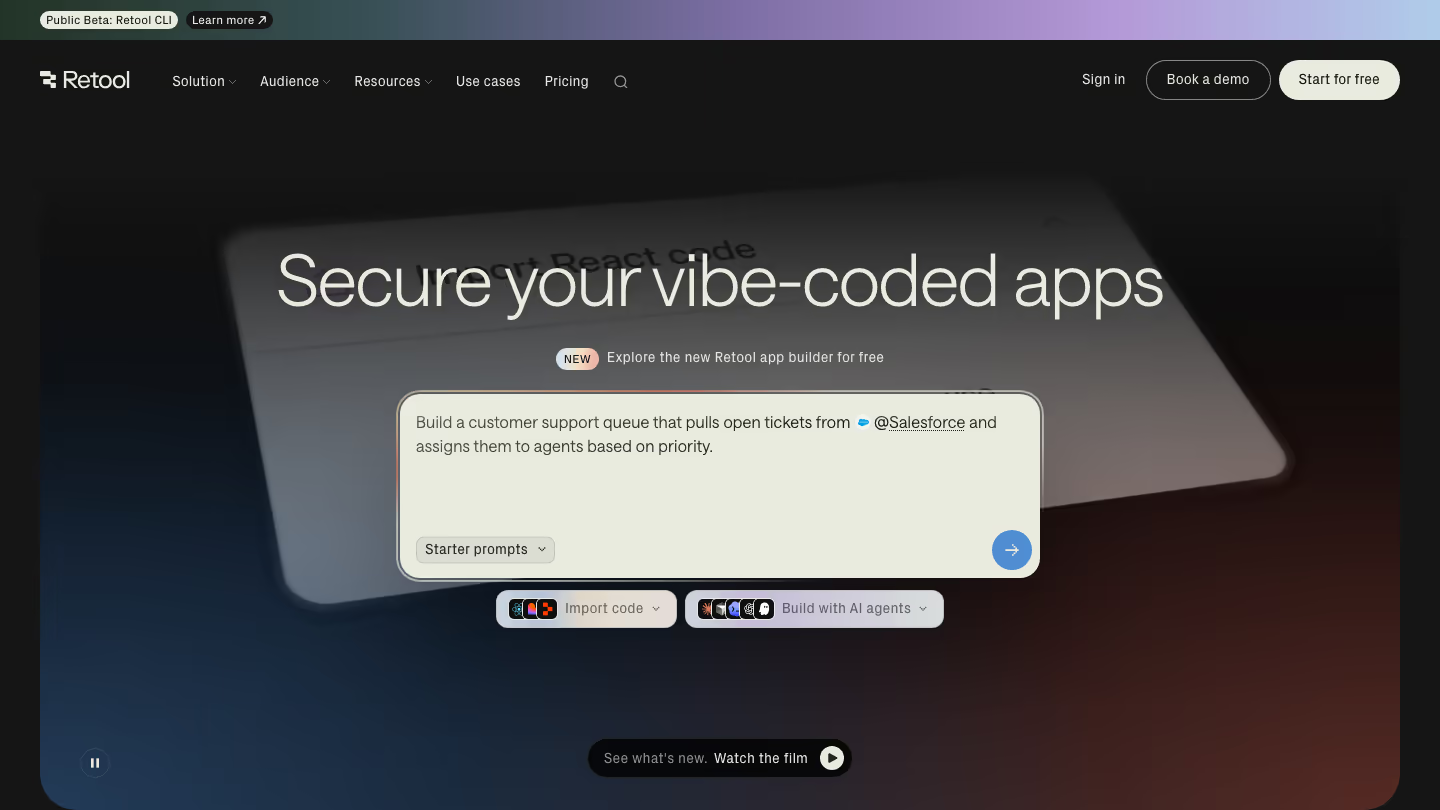
Retool is used by large software teams to build internal tools. It can build web apps, native mobile apps, workflows and AI agents.
Unlike Lovable, Retool can use your existing database. It connects to nearly any database or API. You can also use Retool Database if you need a new DB.
Its AI builder only works for classic web apps, so you have to build mobile apps without it.
Superblocks
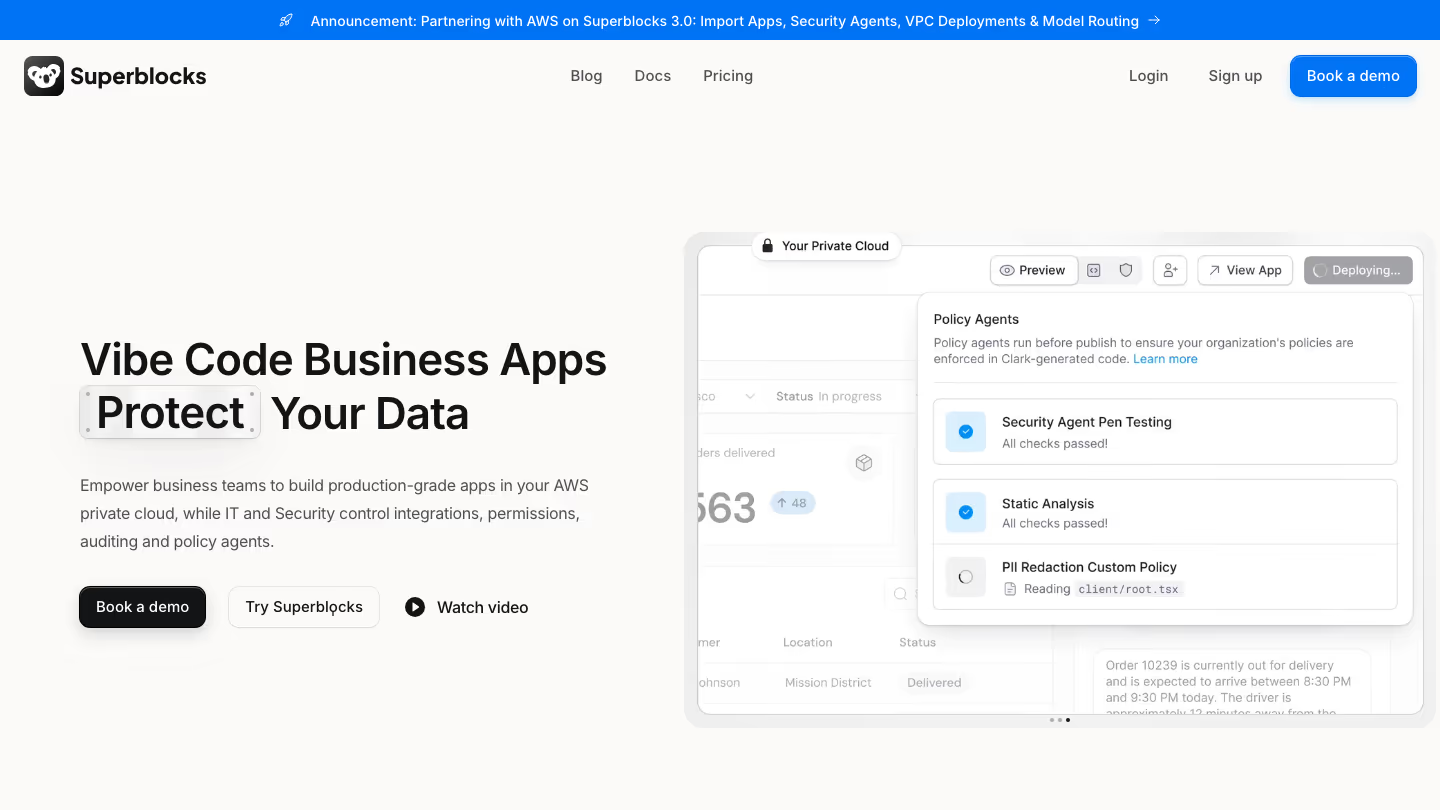
Superblocks builds internal apps for companies where security and IT set the rules. Its agent, Clark, uses your private data across 35+ sources, such as PostgreSQL, BigQuery and Oracle, to generate React code.
For regulated teams, it's the strongest option on this list. A Superblocks data plane can run inside your own VPC on AWS, GCP or Azure, so production code runs within your network. It has SOC 2 Type II and will sign a Business Associate Agreement for HIPAA, which Lovable doesn't. It can also import projects from Lovable, Replit and Claude.
You can use coding agents like Cursor and Claude Code to manage your Superblocks organization through its MCP server.
Which alternative should you pick?
If you built a prototype in Lovable or Bolt and want to turn it into a real product, sync it to GitHub and continue in your coding agent like Cursor or Claude Code.
If you are building new pages where each page must look distinctive, yet on-brand, you can try Kombai to generate standout designs for those pages.