Live from the workshop · Ise, Mie
42° 14′ N · 136° 42′ E
Autumn / Winter — Vol. 138
Folio 01 of 04
染元・白金

SHIROKANE

katagami atelier — est. 1887
Ise · Mie prefecture

A scattering of pine needles, cut by hand from mulberry-paper laminated with persimmon tannin. Backlit, the negative space breathes — a stencil holds shape only as long as the cutter's patience does.

Scroll to enter the atelier
◯ 序 — preface
藍と渋紙、糊と時間。

Cloth made of silence, light, and four seasons of waiting.

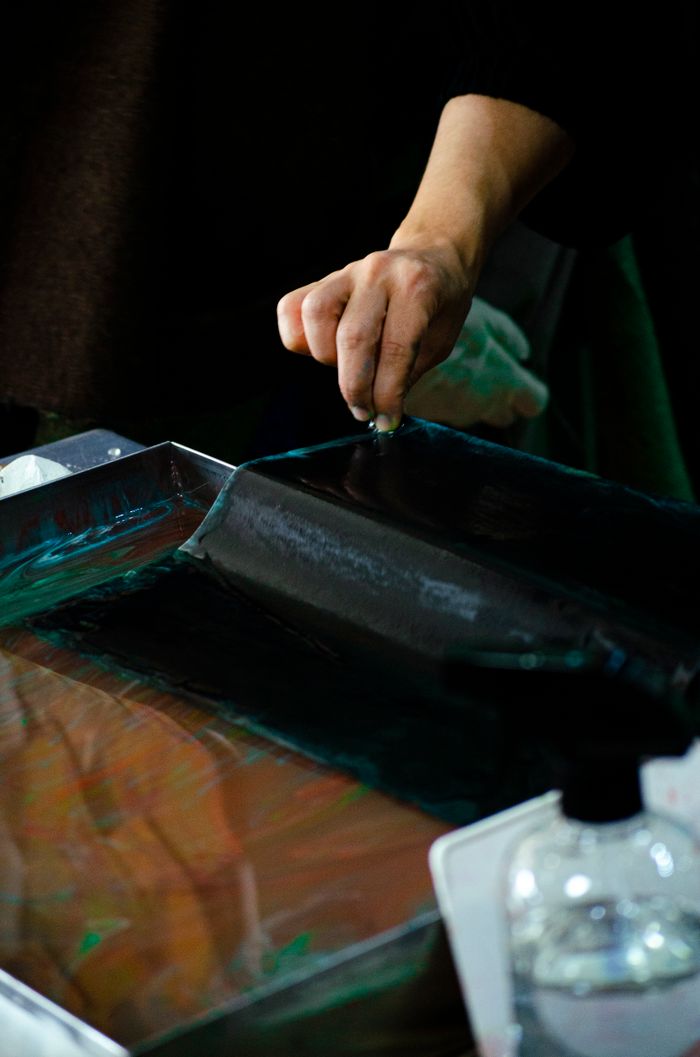
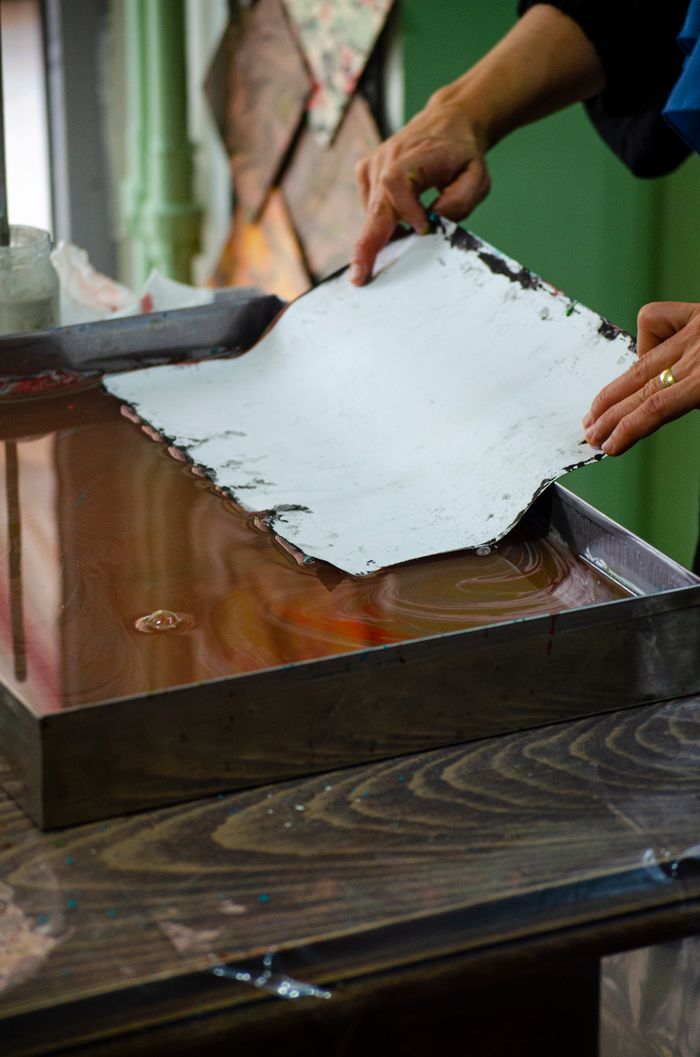
For four generations our house has cut katagami from mulberry paper and laid them, sheet by sheet, against bolts of silk and ramie. The result is not printed — it is resisted. The fabric remembers what the stencil refused to give it. We dye twelve metres in a day, no more.

0
Years since first vat
0
Master cutters living
0m/day
Maximum dyeing yield
II. 反物帖 — bolt register

This season'skatazome bolts.

Each bolt is photographed at three distances — the raking-light macro of weave structure, the pattern repeat, and the bolt-end drape. Hover the title for the pattern's etymology.

SHK·24·AW·001 — seigaiha
macro indigo weave, seigaiha
macro · raking light

青海波

seigaiha
No. 01 — pattern repeat 4.2 cm
CODESHK·24·AW·001
REGIONIse / Mie
FIBRE100% kibiso silk
THREAD78 × 92 / inch
WIDTH38 cm tan-width
DYEsukumo indigo · 18 dips
PER METRE¥ 48,000
Etymology

"Blue ocean waves." First recorded as a court-music costume in the Heian period; the repeat mimics the patient layering of distant surf seen from the Ise headlands.

麻の葉

asanoha
No. 02 — pattern repeat 2.8 cm
CODESHK·24·AW·002
REGIONKyōto / Nishijin
FIBRE62% ramie · 38% silk
THREAD104 × 88 / inch
WIDTH40 cm tan-width
DYEpersimmon + iron mordant
PER METRE¥ 32,000
Etymology

"Hemp leaf." Worn on infant kimono as a charm — hemp grows straight and quickly, a wish for the wearer to do the same. The hexagram radiates from a single cut point.

macro weave, asanoha
macro · raking light
SHK·24·AW·002 — asanoha
SHK·24·AW·003 — gyōgi-komon
macro silk, gyogi komon
macro · raking light

行儀小紋

gyōgi-komon
No. 03 — pattern repeat 0.9 cm
CODESHK·24·AW·003
REGIONTōkyō / Yotsuya
FIBRE100% chirimen silk
THREAD128 × 124 / inch
WIDTH36 cm tan-width
DYEiron-bark / charcoal grey
PER METRE¥ 64,000
Etymology

"The pattern of good manners." Dots arranged on a 45° grid, each spaced as if bowing toward the next. Edo-Komon's most disciplined cut — over 900 perforations per square centimetre.

Showing 03 of 14 bolts · winter release 14 nov View full register
III. 工程 — twelve hands, one bolt

The craft, told
in twelve photographs.

A bolt of katazome silk passes through twelve sets of hands before it leaves the workshop. Scroll the rail — the photographs march in the order the work is done, from a single brush of charcoal on washi to the final salt-rinse in the river.

STEP 01 / 12 · 下絵
drawing the cartoon

下絵を引く

drawing the cartoon

A first pencil tracing on persimmon-tanned washi; the lattice is laid out by eye.

STEP 02 / 12 · 紙重ね
laminating the sheets

紙を重ねる

laminating the sheets

Three layers of mulberry paper are pasted together, fibre running crosswise.

STEP 03 / 12 · 渋付け
persimmon tanning

柿渋を引く

persimmon tanning

Sheets are brushed with fermented persimmon juice and cured outdoors for ninety days.

STEP 04 / 12 · 彫る
cutting the katagami

型を彫る

cutting the katagami

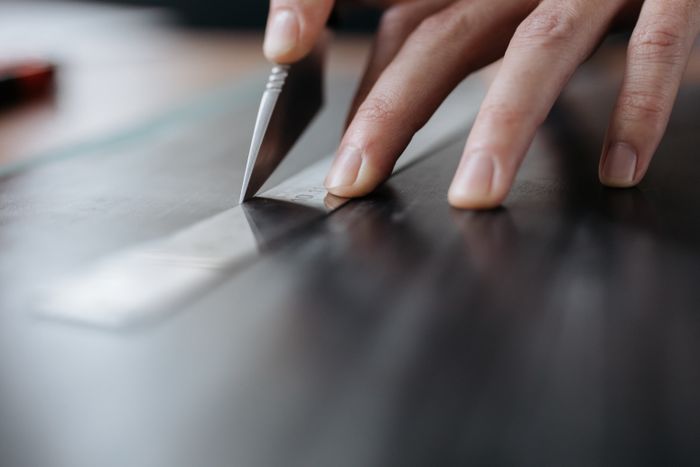
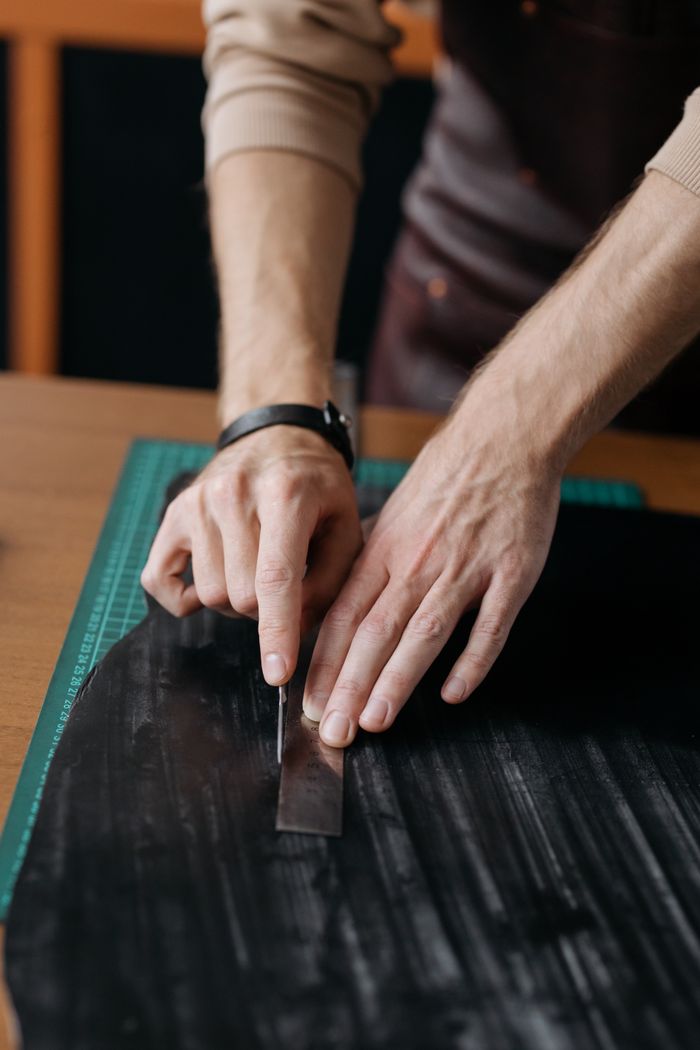
The carver works in stillness — a single dragged blade for every aperture in the field.

STEP 05 / 12 · 突き彫り
awl-punched dot

突き彫り

awl-punched dot

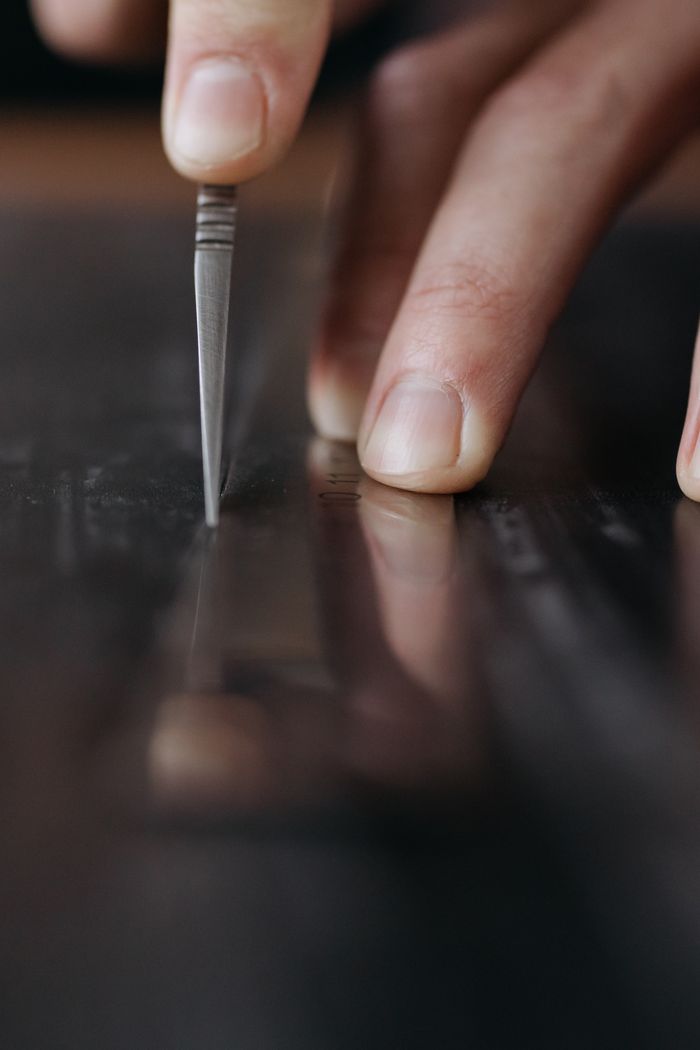
Komon dots are punched, not cut — a single forged awl, rotated by the wrist.

STEP 06 / 12 · 紗張り
silk-mesh reinforcement

紗を張る

silk-mesh reinforcement

Fine silk gauze is glued across the stencil so floating islands do not collapse.

STEP 07 / 12 · 糊置き
rice-paste resist

糊を置く

rice-paste resist

A spatula drags warm nori across the stencil and into the weave below.

STEP 08 / 12 · 乾燥
drying the paste

糊を乾かす

drying the paste

The bolt is hung in the shade. Direct sun cracks the resist; only ambient air will do.

STEP 09 / 12 · 藍建て
raising the indigo

藍を建てる

raising the indigo

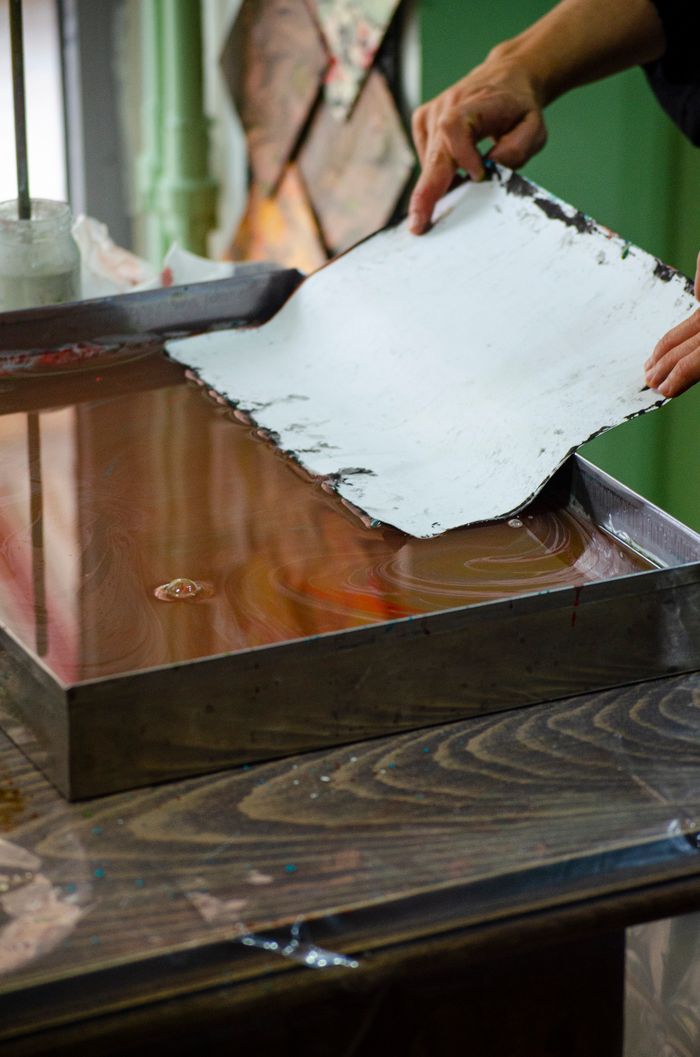
Sukumo, wood-ash lye, sake, and patience: the vat ferments for two weeks.

STEP 10 / 12 · 浸染
the dipping

藍に浸す

the dipping

Eighteen short dips, each followed by oxidation in open air. The cloth turns green, then blue.

STEP 11 / 12 · 水元
river rinse

水で洗う

river rinse

The rice-paste is dissolved in cold running water; the reserved pattern emerges cream-white.

STEP 12 / 12 · 仕上げ
making the bolt

反物にする

making the bolt

Steamed, stretched on bamboo poles, folded into a tan — twelve metres, ready to leave.

← drag the rail · 12 steps · approx. 110 working days per bolt
Watch the full documentary film
recise · 06:14
IV. 別誂 — bespoke yardage

Cloth, cut
to your silence.

For interior houses, ceremonial tailors, and patrons commissioning a single garment, we accept a small number of bespoke yardage projects each year. Bring us a family crest, a poem, a Heian textile fragment — we will cut a new katagami from it.

IV. 別誂 — terms of commission
Minimum bolt
12 metres
Lead time
9 — 14 months
Stencil fee
from ¥ 380,000
Editions
1 — 3 bolts
Inquiry · 別誂のお問合せ
Tell us, in your own words, what you would like the cloth to remember.
01 — Your name
02 — Atelier or house
03 — Yardage
04 — Fibre
05 — Pattern intent
VOL. 138 · folio four — HERITAGE — established meiji 20 / 1887
V. 来歴 — the long lineage
京友禅と江戸小紋
Between Kyō-Yuzen and Edo-Komon — two rivers, one estuary of cloth.
archival textile photograph
archive · plate 0042kyōto, 1923
est. 1887

Kyō-Yuzen lineage

Painterly, polychrome, with rice-paste piped from a cone — a manner inherited from the Genroku-era painter Miyazaki Yūzen. Our house keeps the wax-rosin recipe his apprentice carried east.

In autumn we still grind our own pigments at the Kamo river, drying the powders on cedar boards — a half-day's labour for an hour of brushwork.

Living Treasure

Edo-Komon discipline

A monochrome counter-tradition perfected by samurai retainers forbidden bright colour: at three paces a solid grey; at three inches, a constellation of nine-hundred-per-square-centimetre dots.

Our seventh-generation cutter, Komuro Tatsu, holds the designation ningen kokuhō — Living National Treasure — for komon work first cut at age fourteen.

1887
First vat raised

Shirokane Tōkichi opens a single-vat workshop in Ise.

1923
Kyōto branch

A second house opens in Nishijin; the looms come east.

1955
First komon master

Apprenticeship begins under the Yotsuya school.

1998
Living Treasure

Komuro Tatsu is formally designated ningen kokuhō.

2024
Fourth generation

Twelve metres a day, by hand, and not a metre more.